
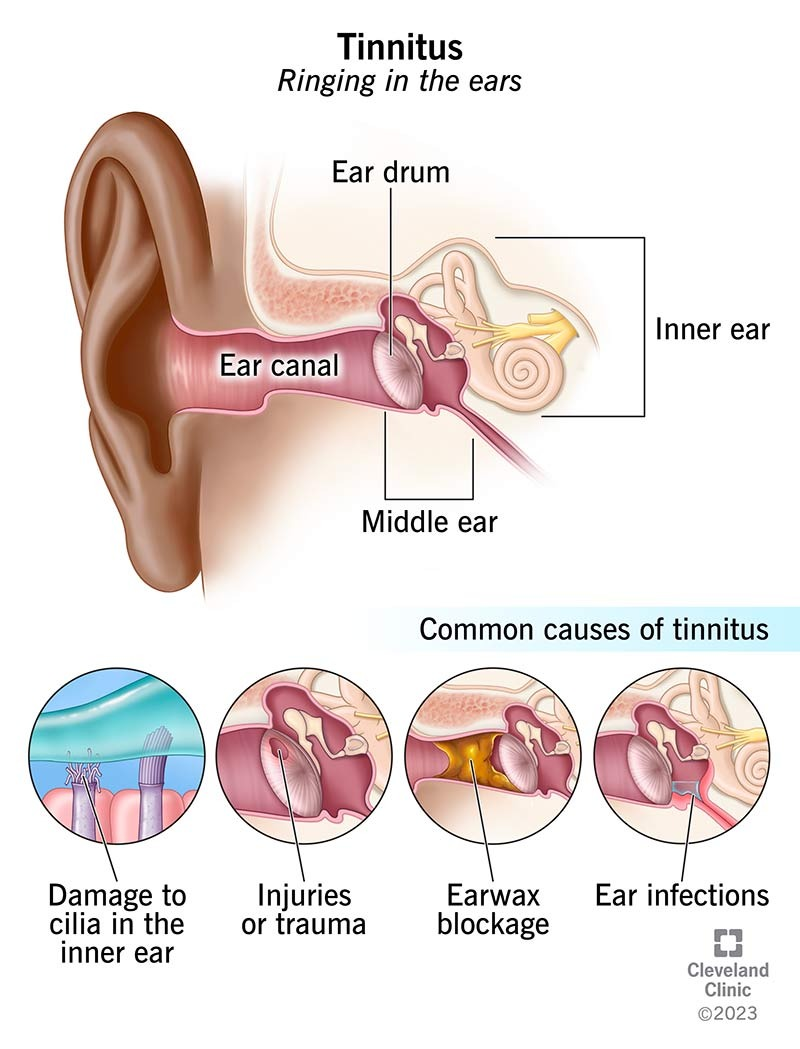
What tinnitus is
Tinnitus is the perception of sound with no external source: ringing, hissing, buzzing, crickets or a pulse. It is a symptom rather than a disease, and it usually arises when reduced input from the ear leads the hearing pathway to increase its own internal gain, much as a microphone left turned up produces a hiss.
It is very common. Most people experience it briefly at some point, and for a minority it becomes persistent and intrusive enough to affect sleep, concentration and mood.
When to be seen promptly
Most tinnitus is benign, but these features deserve a timely assessment rather than a wait-and-see approach.
- Tinnitus in one ear only, or clearly worse in one ear
- Sudden hearing loss alongside the noise
- A sound that pulses in time with your heartbeat
- Dizziness, vertigo or unsteadiness with the tinnitus
- Tinnitus after a head injury, or with ear pain or discharge
What the evidence supports
Assessment comes first: a full hearing test, tympanometry and, where indicated, pitch and loudness matching define what is driving the symptom. Treating any underlying cause, such as wax, middle-ear fluid or medication effects, resolves a proportion of cases outright.
For persistent tinnitus with hearing loss, hearing aids are the single most effective step, because restoring real sound reduces the contrast that makes the internal noise stand out. Sound therapy and structured counselling based on cognitive behavioural principles have the strongest evidence for reducing distress, and many Starkey devices include built-in tinnitus sound stimuli that can be tuned to your own profile.
What to be careful about
There is no supplement, herbal remedy or device that has been shown to cure tinnitus, and claims of a cure are a reliable sign to walk away. Silence tends to make tinnitus louder, so complete quiet at bedtime is usually unhelpful; a low background sound is better.
Habituation is realistic for most people. The sound may not disappear, but with the right combination of amplification, sound therapy and understanding, it stops holding attention. Our tinnitus assessment and management service works through that plan step by step, for patients here on the Coast and those travelling from Nairobi and beyond.