
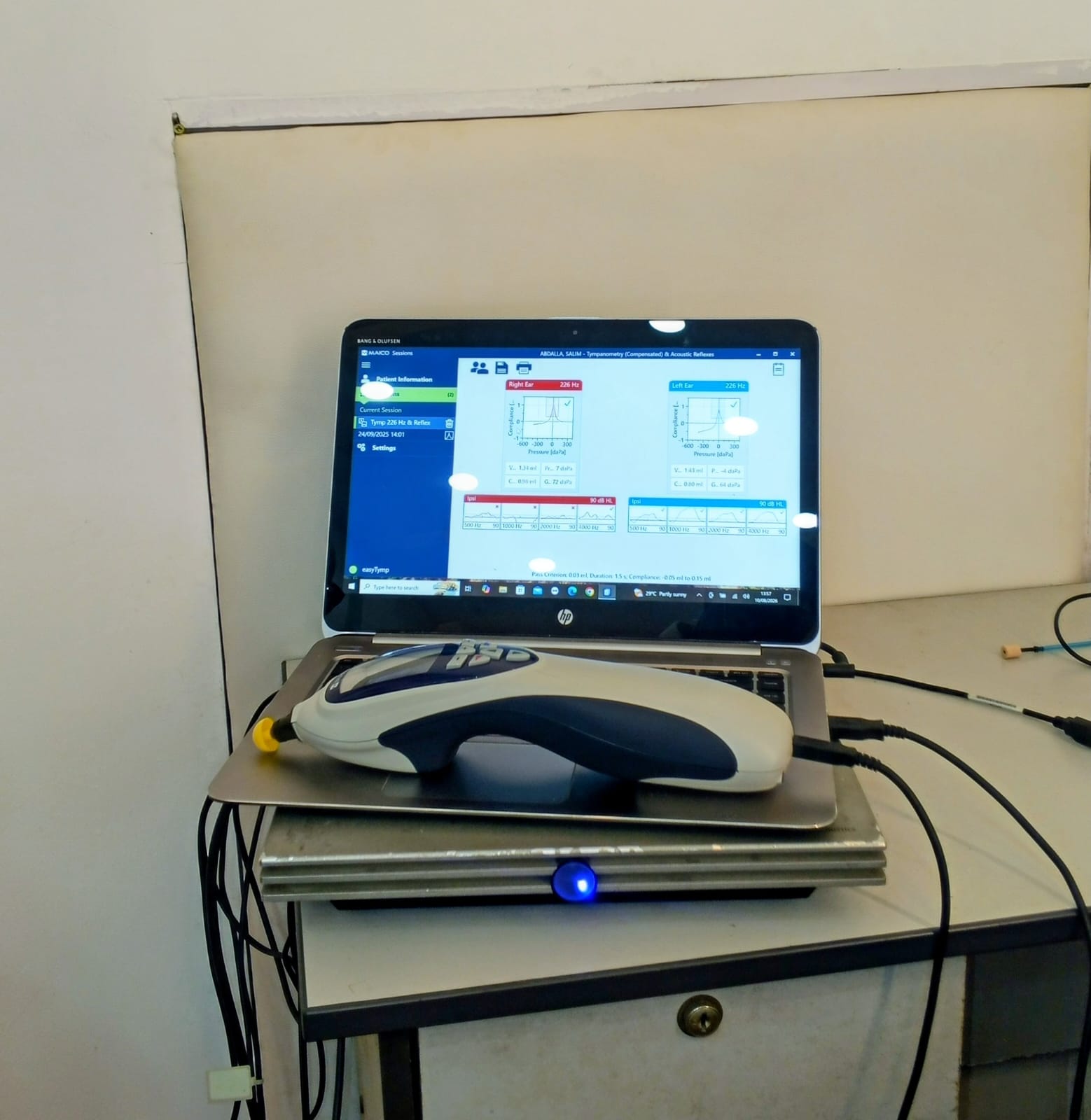
Bithermal caloric irrigation, vestibular caloric testing
Caloric Test
A balance investigation that stimulates each inner ear separately with warm and cool irrigation to reveal which side is underperforming in patients with dizziness or vertigo.
What this assessment is
The caloric test remains the only routine assessment that examines one labyrinth at a time. Warm and cool stimuli are delivered into the ear canal, creating a temperature gradient across the horizontal semicircular canal. In a healthy ear this produces a predictable eye movement called nystagmus, which is recorded and measured. Comparing the strength of the response between the two ears tells us whether there is a unilateral weakness, which is the classic signature of conditions such as vestibular neuritis, labyrinthitis and Meniere's disease. At Mombasa Hearing Centre this test is always preceded by a full ear examination and hearing assessment, because balance and hearing share the same organ.
Why it matters
- Dizziness is one of the most misdiagnosed complaints in general practice, and caloric testing gives objective evidence of which ear is at fault.
- It distinguishes an inner ear cause from central or cardiovascular causes, preventing months of unnecessary treatment.
- The degree of weakness measured guides the design of an individualised vestibular rehabilitation programme.
- Serial testing shows whether the brain is compensating over time.
Step by step
How the assessment is performed
Each stage follows established audiological protocol, and you are told what is happening before it happens.
- 1
Screening and otoscopy
We take a careful history of the dizziness, its triggers, duration and associated hearing symptoms, then check both eardrums. An intact eardrum is required for water irrigation; where there is a perforation an air caloric technique is used instead.
- 2
Baseline eye recording
Eye movements are recorded, with vision removed so that gaze cannot suppress the response. Spontaneous nystagmus is checked before any stimulus is given.
- 3
Four irrigations
Each ear receives a cool and a warm stimulus in turn, with a rest of about five minutes between each. Cool stimuli produce nystagmus beating away from the tested ear and warm stimuli towards it, the pattern remembered by clinicians as COWS.
- 4
Measurement of slow phase velocity
The peak slow phase velocity of the nystagmus is measured for each of the four responses. These four values are entered into the standard formulae for unilateral weakness and directional preponderance.
- 5
Recovery and counselling
You rest until any residual dizziness settles. The audiologist explains the findings, and if a weakness is confirmed, the rehabilitation plan begins from that same conversation.
How to prepare
- Do not eat a heavy meal within two hours of the appointment, and avoid alcohol for 48 hours.
- Stop vestibular sedatives, antihistamines and sleeping tablets for 48 hours where your doctor agrees, since they suppress the very responses we are measuring.
- Do not drive yourself. Bring someone who can take you home.
- Wear comfortable clothing and bring your glasses rather than contact lenses.
Understanding your results
- Symmetrical responses
- Both labyrinths respond equally. The peripheral vestibular system is likely intact and we look at other causes, including positional vertigo and blood pressure.
- Unilateral weakness
- One ear responds significantly less than the other, typically beyond 25 percent difference. This localises the problem and is the usual finding after vestibular neuritis.
- Bilateral reduction
- Both ears respond poorly, which can follow certain medications or systemic disease. Rehabilitation focuses on vision and proprioception to compensate.
FAQ
Common questions
Will the test make me very dizzy?
You will feel a spinning sensation for less than a minute after each irrigation. It is unpleasant briefly, then it passes. Provoking that response in a controlled setting is the point of the test.
Can I go back to work afterwards?
Most people can, but plan a quiet couple of hours first and arrange transport rather than driving straight away.
Is it safe with a perforated eardrum?
Water irrigation is avoided, and an alternative air based or rotational assessment is used instead. Always tell us about previous ear surgery or discharge.
Explore
Other tests we perform
Pure Tone Audiometry
The reference test for hearing. It maps the quietest sounds you can detect across the speech frequencies and shows whether a loss sits in the outer, middle or inner ear.
Paediatric Hearing Assessment
Age appropriate testing for babies and children, using play, toys and visual rewards to obtain reliable thresholds long before a child can describe what they hear.
Tympanometry and Impedance Audiometry
A rapid objective measure of how the eardrum and middle ear move, detecting fluid, negative pressure, perforation and ossicular problems within seconds per ear.