

Hearing aid programming, real ear verification, aftercare
Hearing Aid Fitting and Verification
Programming your devices to your own audiogram and ear acoustics, verifying the output objectively, and supporting you through the adjustment period.
What this assessment is
Buying a hearing aid and being fitted with one are not the same thing. A fitting at Mombasa Hearing Centre begins with your audiogram, applies a validated prescription target, and then verifies what the device is actually delivering in your ear rather than assuming the software got it right. Ear canals differ enormously in volume and shape, and the same device can be several decibels off target in two different people. Verification, fine tuning and structured follow up are what turn a device into better hearing.
Why it matters
- An unverified fitting is the most common reason hearing aids end up in a drawer.
- Correct output protects residual hearing by keeping loud sounds below your uncomfortable levels.
- Physical fit and retention matter in a hot, humid coastal climate, and are checked at every visit.
- Follow up in the first three months is when most of the real benefit is gained.
At the centre
How it looks in practice
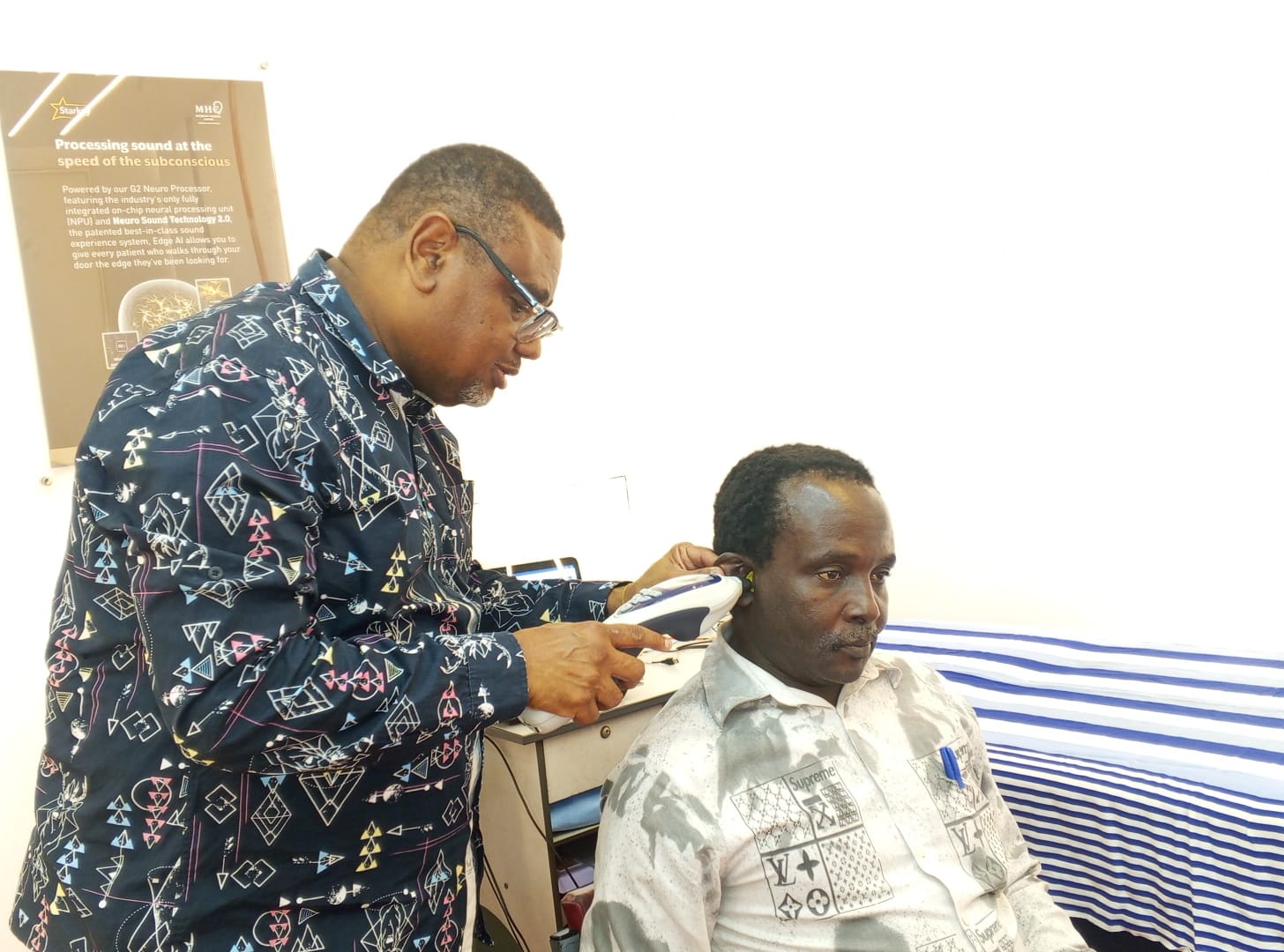
Photographs taken at Mombasa Hearing Centre during real clinical sessions.

Step by step
How the assessment is performed
Each stage follows established audiological protocol, and you are told what is happening before it happens.
- 1
Review of needs and lifestyle
We discuss where you struggle most, whether that is the mosque, church, classroom, market, meetings or the telephone, and match technology and settings to those situations rather than to a brochure.
- 2
Physical fit
Domes, moulds or receivers are selected and checked for comfort, retention and feedback. Poor physical fit undermines even the best electronics.
- 3
First fit to prescription
Your audiogram is loaded and a validated prescription target is applied for soft, average and loud inputs, rather than an arbitrary manufacturer default.
- 4
Verification
Output is measured and compared against target, then adjusted until soft speech is audible, average speech is comfortable and loud sounds remain below your discomfort level.
- 5
Orientation and counselling
You and your family are shown insertion and removal, batteries or charging, cleaning, moisture care and phone connectivity. We set realistic expectations for the first few weeks.
- 6
Follow up and fine tuning
Review appointments in the first weeks address the situations you report back on. Cleaning, servicing, battery supply and repairs continue from the centre for the life of the device.
How to prepare
- Bring a family member. A second listener helps judge speech clarity and remembers the care instructions.
- Bring your most recent audiogram if it was performed elsewhere.
- Set aside the full appointment time and plan a quiet rest of the day, since new sound takes some adjustment.
- Note down the three situations you most want to improve, and bring that list.
Understanding your results
- Matched to target
- Measured output sits on prescription across the speech frequencies, giving audibility without discomfort.
- Adjustment period
- Two to six weeks of daily wear as the brain reacclimatises to sounds it has not processed for years. Wearing time is built up steadily.
- Long term care
- Reviews, cleaning, re programming as hearing changes, and a reliable local supply of batteries and accessories.
FAQ
Common questions
Can I be fitted the same day as my test?
Often yes, when a suitable device is in stock. We keep inventory on site so patients travelling from outside Mombasa are not sent away empty handed.
Why does my own voice sound strange at first?
It is the occlusion effect from blocking the canal. Venting, mould changes and software adjustments reduce it, and most people adapt within a few weeks.
What if the aid does not suit me?
Come back. Fine tuning is part of the service and most complaints are solved with adjustment rather than replacement.
Explore
Other tests we perform
Pure Tone Audiometry
The reference test for hearing. It maps the quietest sounds you can detect across the speech frequencies and shows whether a loss sits in the outer, middle or inner ear.
Paediatric Hearing Assessment
Age appropriate testing for babies and children, using play, toys and visual rewards to obtain reliable thresholds long before a child can describe what they hear.
Tympanometry and Impedance Audiometry
A rapid objective measure of how the eardrum and middle ear move, detecting fluid, negative pressure, perforation and ossicular problems within seconds per ear.